Start with the plain guide. Open the deeper layers when you want the ecosystem around it.
IntensityNoticeRead, understand, orient.
StewardSchool / College
1Orgs
0Policies
1Links
First readWhat to know+
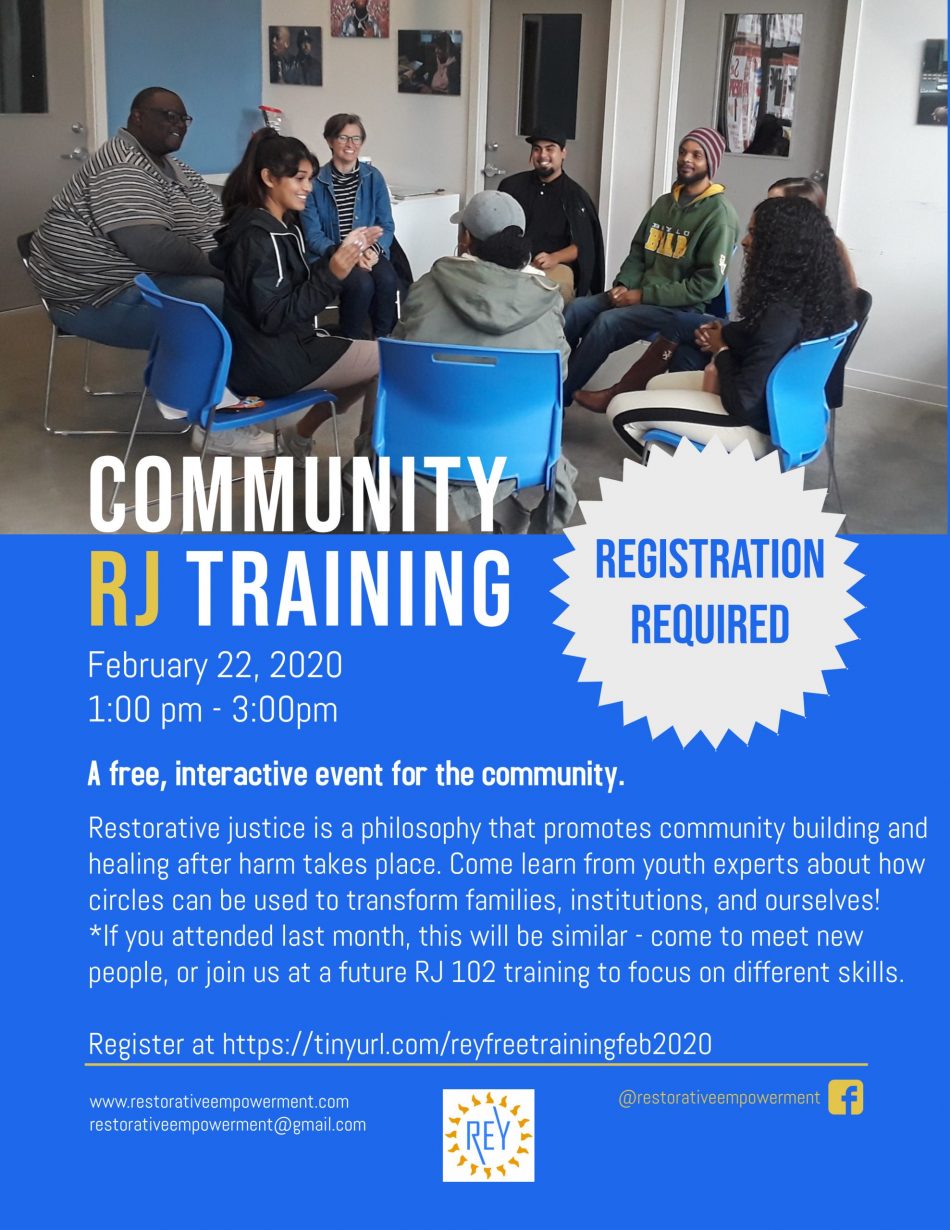
Topic: Restorative justice training — how to heal harm and build community using talking circlesWho taught it: Youth experts from Restorative Empowerment for YouthWhere & When: Smith Neighborhood Library, Houston — February 22, 2020, 1–3 PMCost: Free and open to everyone in the communitySource: Houston Peace & Justice Center civic guide
Next rungHow to step in+
Good first step: Act Houston Peace & Justice Center
Search 'Houston Peace & Justice Center restorative justice' to find upcoming free trainings near you.
Restorative Empowerment for Youth offered a free two-hour training at Smith Neighborhood Library in Houston. Youth experts led the session, showing community members how restorative justice circles can help heal harm and strengthen families, schools, and other institutions.
Restorative justice is a philosophy built around healing and community. Instead of asking only 'Who broke the rules and what's the punishment?' it asks 'Who was harmed, what do they need, and how can we make things right together?' Circles are one of the main tools. A circle brings everyone affected by a harm into an honest, structured conversation guided by shared values. Youth experts — people with lived experience — led this training and showed how circles work in real life.
Start by learning the basics. Reach out to Restorative Empowerment for Youth directly to ask about future trainings or resources. Practice the listening and speaking habits that make circles work: speak from your own experience, listen without interrupting, and focus on needs rather than blame. Then look for chances to use these skills — in a family disagreement, a school conflict, or a community dispute. Many Houston schools and nonprofits already use restorative practices, so connecting with local organizations can open doors to more training and support.
No fixed date
Not location-specific
Restorative justice connects to broader efforts around criminal justice reform, youth leadership, and community healing in Houston. If you care about human rights, school discipline, or neighborhood safety, this practice ties directly into those conversations. Organizations working on juvenile justice, mental health, and community mediation often use similar approaches.
Restorative justice gives communities a practical way to repair harm without relying only on punishment. Circles bring people together to listen, take responsibility, and rebuild trust. Learning this approach can change how you handle conflict at home, at school, or in your neighborhood.