The Ground Beneath Us
Park Ranger Takes First Wild Photos of Baby Giant Salamanders
A National Park Service biologist captured the first photos of newly hatched California giant salamander larvae in the wild.
By Good Good Good -- Apr 13, 2026
Overview
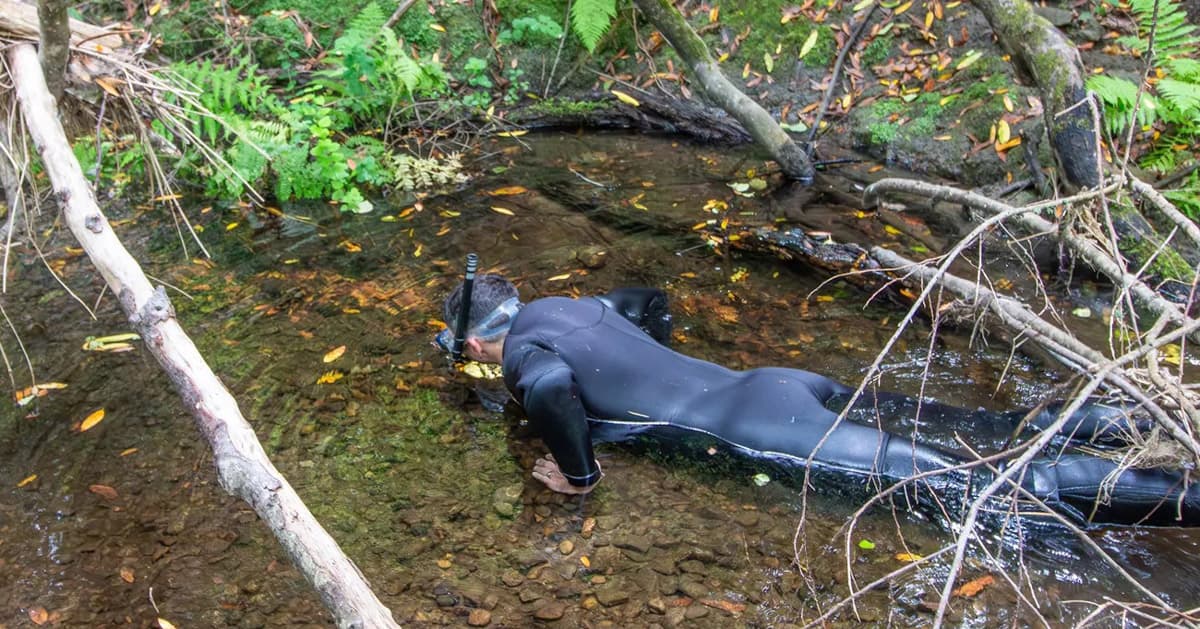
National Park Service biologist Michael Reichmuth was doing his regular job when he made an amazing discovery. While snorkeling in Olema Creek at Point Reyes National Seashore last September, he spotted something no scientist had ever photographed before in the wild.
Reichmuth found a group of newly hatched California giant salamander larvae clustered together under rocks. At first, he thought they were fish. The tiny creatures had large, whitish yolk sacs that help them survive for many months while they learn to find food. Scientists confirmed this was the first time anyone had captured baby giant salamanders on camera in their natural habitat.
These salamanders can grow up to 12 inches long, making them the biggest land salamander species in North America. Despite their "giant" name, they are very hard to study because they rarely fall into the traps scientists set to catch them. Most of what we know about them comes from studying similar salamander species.
California giant salamanders are considered a "Species of Special Concern" because they have a limited range and are sensitive to environmental changes. Scientists don't have enough data to know if their populations are declining, which makes discoveries like this even more valuable.
This single photo helps scientists understand where giant salamanders build their nests and when their babies develop. The National Park Service encourages visitors to Point Reyes to keep their eyes open for these special creatures and share any photos they take with ongoing salamander research projects.
Resources
About the source
Good Good Good is a media company sharing good news and actionable ways to make a difference. They publish stories about people, organizations, and ideas making the world better.
Knowledge Graph
How this connects
Connections across learning, action, organizations, and policy.
Choose your next step
Every page is a door. Where do you want to go?