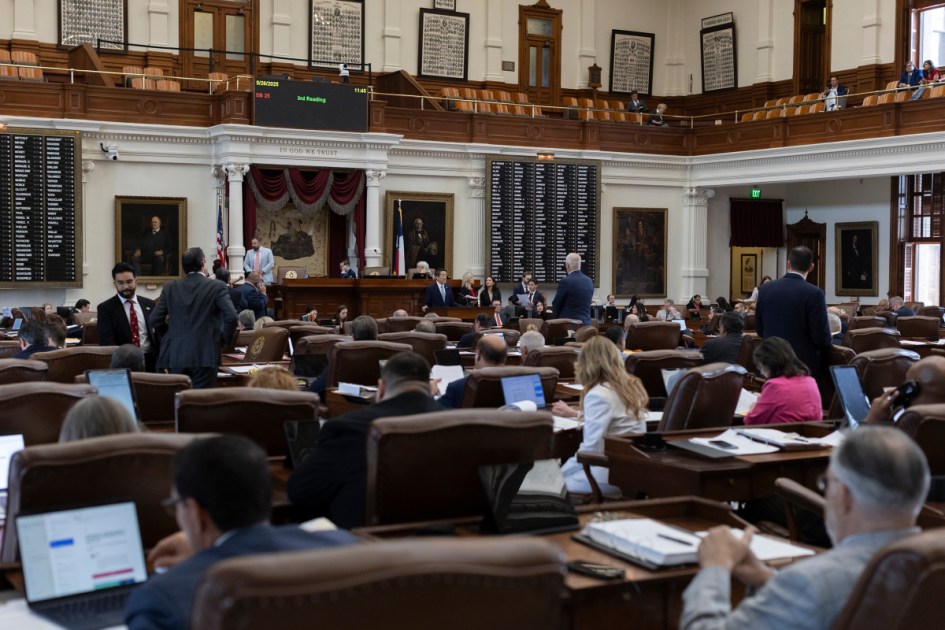
The U.S. Supreme Court just changed the rules on voting rights challenges in a big way. In a case called Louisiana v. Callais, the court ruled that people who want to challenge an unfair voting map must now prove lawmakers meant to weaken minority voting power — not just that the map had that effect. This makes it much harder to fight maps in court. Some Texas lawmakers are already talking about redrawing the state's congressional, state House, state Senate, and State Board of Education (SBOE) district lines when the Legislature meets again in 2027. For Houston-area residents, this could affect whether your community has a real voice in Austin.
Section 2 of the Voting Rights Act (VRA) is a federal law that bans vote dilution — that is, drawing maps that weaken the power of minority voters. Before this ruling, a community could win a court challenge by showing a map had the effect of reducing minority voting power, even without proving lawmakers planned it that way. The Supreme Court's conservative majority now says challengers must prove intentional dilution. Justice Elena Kagan, writing in dissent, said this new standard would wipe out the vast majority of Section 2 challenges. In Texas, some Republican lawmakers had been waiting for this ruling and are already discussing redrawing district lines before the 2030 Census. A political science professor at the University of Houston noted that after this decision, there are virtually no legal constraints left if lawmakers want to draw an aggressively partisan map.
You do not have to wait for 2027 to get involved. Learning how redistricting works — and who draws the maps — is a good first step. Your state representative and state senator sit on committees that will shape this process. Attending their town halls, contacting their offices, and asking specific questions about redistricting puts your voice on record. Local nonpartisan voter education groups can help you understand proposed maps and how they might affect your area. Staying registered to vote also matters, because turnout data from your precinct influences how districts are drawn.
No fixed date
Not location-specific
This story connects to broader issues that affect Houston daily life: school funding decisions made by the State Board of Education, transportation and infrastructure funding shaped by the state Legislature, and healthcare access policies debated in Austin. How your community is drawn into — or out of — a district can shift who makes those calls on your behalf.
Voting district maps decide who represents you in Austin and Washington, D.C. They can determine whether your neighborhood's needs — schools, roads, healthcare — get heard at all. Houston is one of the most diverse cities in the country. Harris County includes large Black, Latino, and Asian communities. How district lines are drawn can either keep those communities together, giving them a stronger voice, or split them apart, making it harder to elect candidates who reflect their interests. The Callais ruling removes a key legal protection that had made it easier to challenge maps that hurt minority voters. Texas lawmakers may now have more freedom to draw maps along partisan lines, and some have said publicly they plan to do exactly that.