Hospital Engagement in the Social Determinants of Health in Texas: Insights from a National Survey of US Hospitals - Episcopal Health Foundation | Community Exchange
GuideOur Health
Hospital Engagement in the Social Determinants of Health in Texas: Insights from a National Survey of US Hospitals - Episcopal Health Foundation
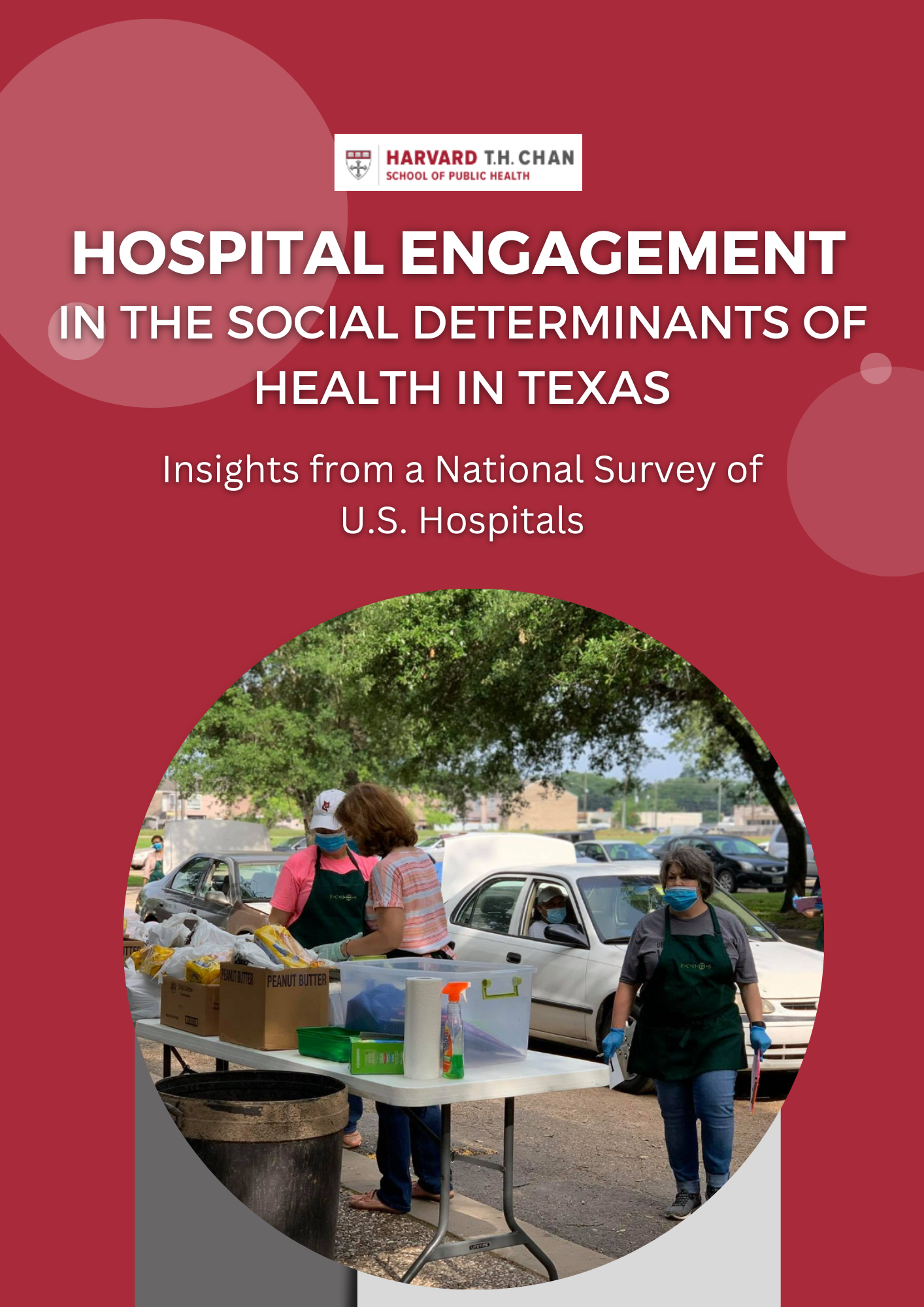
A 2023 report examining how 346 Texas hospitals screen for social needs, run SDOH programs, and build community partnerships.
Start with the plain guide. Open the deeper layers when you want the ecosystem around it.
IntensityParticipateJoin a meeting, use a service, take part.
StewardFoundation
1Orgs
0Policies
1Links
First readWhat to know+
Topic: How Texas hospitals address housing, food, and income needs that affect healthSource: Episcopal Health Foundation & Harvard researchersHospitals Studied: 346 Texas hospitalsKey Areas: Screening patients, running SDOH programs, and building community partnershipsReading Time: About 5–8 minutes
Texas hospitals are doing more to address the root causes of poor health — things like unstable housing, limited food access, and low income. A 2023 report from Harvard researchers and Episcopal Health Foundation studied 346 Texas hospitals to see how well they screen patients for social needs, run programs to help, and work with community partners. The findings reveal big gaps, especially at the hospitals that serve the most vulnerable Texans.
The report examines three things: whether hospitals ask patients about social needs (like food insecurity or unsafe housing), what programs they run to address those needs, and how they partner with outside organizations in the community. Researchers compared Texas hospitals to national data and broke results down by hospital type. A key concern: safety-net hospitals, critical access hospitals, and rural hospitals — the ones caring for the most vulnerable patients — are often doing the least to address social needs.
Use this report to understand where Texas hospitals are falling short and where progress is happening. If you work in health care, advocacy, or community services, the findings can help you push for stronger screening practices and better community partnerships at your local hospital. If you are a patient or caregiver, knowing that hospitals can and should screen for social needs gives you a starting point for asking for help beyond medical care.
No fixed date
Not location-specific
This report ties closely to conversations about health equity, Medicaid access, food insecurity, and affordable housing across Texas. It is especially relevant to communities in Houston, where a large safety-net hospital system serves residents with complex social needs. The findings also connect to broader state and national debates about how hospitals spend their community benefit dollars.
Texas has some of the sharpest health disparities in the country. People's health is shaped by more than doctor visits — housing, food, income, and neighborhood all play a major role. These are called the social determinants of health, or SDOH for short. COVID-19 made these gaps even harder to ignore, hitting marginalized communities especially hard. This report gives the first detailed Texas-specific look at whether hospitals are actually stepping up to meet those needs.