Six university students created Aylluq Q'anchaynin to bring solar power to Indigenous communities in Peru. They installed panels for 40 households in Alto Mishagua, a remote settlement with no roads or electricity. Our community can learn from their work to expand clean energy access in underserved areas. Our community grows stronger when we learn together and share knowledge across neighborhoods.
Six university students from Peru saw a problem and turned it into hope. About 30% of rural Amazon communities live without electricity. In the Andes mountains, power access remains spotty or missing entirely.
The students formed Aylluq Q'anchaynin, which means "the energy of the community" in Quechua. Their mission started in 2020 during the pandemic when they focused on Alto Mishagua, a remote settlement with no roads, healthcare, clean water, or electricity. Before their work, residents traveled 5 to 8 hours by boat to reach the nearest city with power, burning up to 10 gallons of fuel each trip.
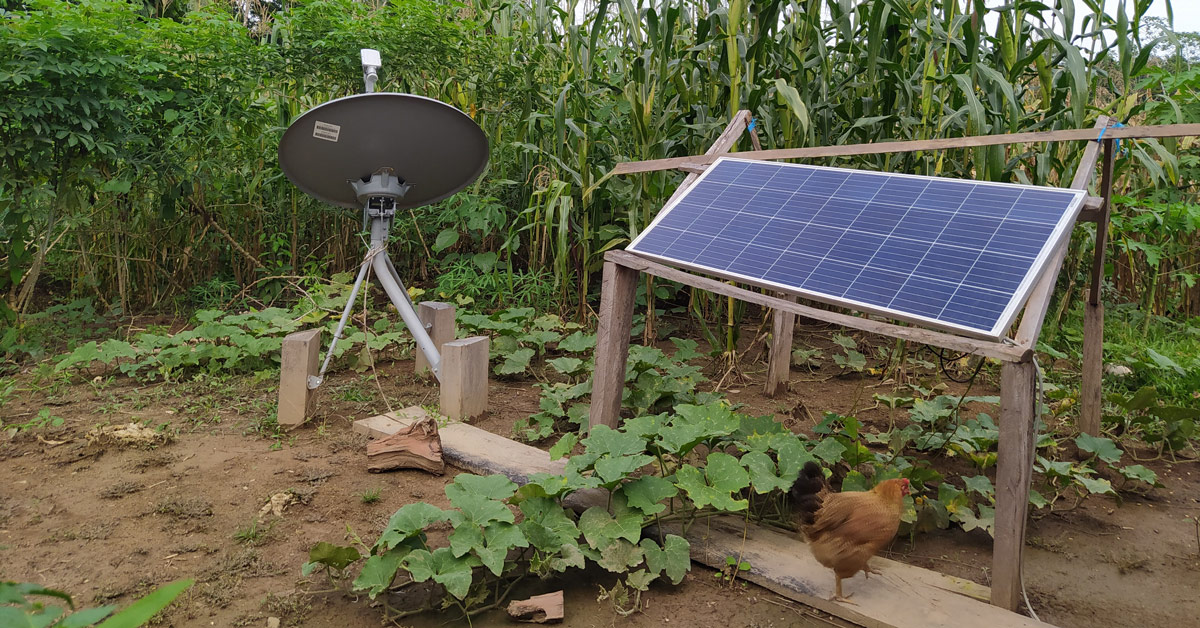
The team first installed satellite internet with a small solar system where people could charge phones and flashlights. Then they built a complete solar energy system for 40 households. This gave the entire community power to respond to emergencies, access public services, and improve education and economic opportunities.
The students continue expanding their work to other Indigenous communities that need clean energy most. Their approach focuses on community independence and self-management of energy systems. We can learn from their model to bring renewable energy solutions to underserved areas in our own region.