Marching for Pride and a Democratic Hungary | Community Exchange
ArticleOur Community
Marching for Pride and a Democratic Hungary
Budapest Pride's president explains how her group defied a government ban and mobilized 350,000 people in Hungary's largest democratic march since 1989.
Viktória Radványi, president of Budapest Pride, shares how her organization defied a government ban and drew 350,000 people to the largest anti-authoritarian march in Hungary since 1989. She explains how 30 years of movement-building, coalition work, and messaging rooted in Hungarian values turned a Pride march into a mass democratic resistance. The interview includes key lessons for civil society groups facing authoritarian pressure.
Viktória Radványi
In this interview, Viktória Radványi, president of Budapest Pride, reflects on how her organization defied a government ban to stage the largest anti-authoritarian mobilization in Hungary since 1989, drawing 350,000 people. She explains how decades of movement-building, internal trust, strategic coalition work, and communication rooted in Hungarian values turned a Pride march into a mass democratic resistance — and what civil society organizations facing similar authoritarian pressures can learn from it.
Scroll down to find the full audio interview, a shortened video version, and key lessons from our conversation with Radványi.
Media
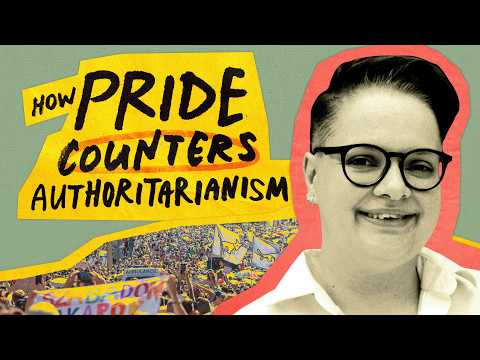
Watch the interview highlights on YouTube
Listen to the full podcast interview
Key Lessons
Authoritarian leaders only understand power. Keeping silent when scapegoated never works. The only effective response is showcasing power, strength, and numbers. Without political cost, authoritarians will attack again and again.
Build the infrastructure before the crisis hits. Budapest Pride had 30 years of movement-building, relationships, tools, and a well-defined manifesto before the ban. When the crisis came, they had 16 trusted people, regular civil society coalitions, a seven-year relationship with the mayor's office, and established mental health support systems. None of this can be improvised.
Consensus and trust within the team are non-negotiable. Facing threats of jail and fines, all major decisions were made collectively. Shared values, transparency about roles and power, and regular care for team wellbeing kept 15 of 16 organizers through months of intense pressure.
Frame the threat correctly — minority attacks are trial runs for majority crackdowns. The strategy was to connect LGBTQ rights to universal freedoms: if the government can ban Pride, it can ban any demonstration. This reframe is what brought in hundreds of thousands of people who had never attended Pride before.
Root your communication in local values, not human rights language. International human rights framing doesn't move people emotionally. Budapest Pride grounded its message in Hungarian history — 1848, 1956 — and values like freedom, security, and patriotism, countering the "Western import" narrative directly.
Build political imagination. Authoritarianism works by limiting what people believe is possible. Pride's core goal was to make people feel, physically and collectively, that a different future is achievable — restoring what Viktória calls "political fantasy."
Survival itself is a message. In a context designed to burn out and disenfranchise activists, simply continuing to build, adapt, and deliver on goals sends a message of hope that reaches ever-wider circles.